How $6,000 on Meta bought fewer leads and more information — and why the cost per lead went up 30% on purpose.
Three thousand dollars a month for two months, held steady. The form went from two questions to eight. What got through was a routing record instead of a hope. The one number that would settle the argument is not recorded yet, and this account says so.
Two months of Meta spend for an automotive company selling a delivery service in a province that did not know the service existed. Three thousand dollars a month, held steady, against a starting split of sixty-five percent Meta and thirty-five percent Google. The campaign's job was not to fill a pipeline. It was to find out what a lead had to tell us before it was worth a salesperson's afternoon.
The Market
Manitoba does not yet know that online car delivery is an option. That single strategic read decided the budget split: Meta's job is to build the demand, and Google's job is to capture it once it exists. Spending against search intent that has not been created yet is spending against a market that is not there.
So half the budget went to prospecting — the Desire campaign, delivery plus top-selling vehicles, weighted deliberately toward Manitoba outside Winnipeg. Fifteen percent to retargeting once the pixel pool had filled enough to be worth addressing. The rest to Google: delivery intent as the protected floor, then financing and brand.
The Budget
Three thousand dollars a month, which is six thousand across the two months this review covers. The budget was not raised, and the playbook is specific about when it will be: once a vehicle-by-angle-by-rep combination has a cost per qualified lead the client can live with, the conversation changes from here is what we are testing to every dollar in returns this many cars out.
The last two months were spent earning that number rather than spending against it.
Meta vs Google
The channels have different jobs and are not interchangeable. Meta can create and shape demand among people who were not looking. Google captures people already expressing intent. Retargeting reconnects a customer with the brand across a purchase cycle that is measured in weeks, not minutes.
The point was never to be everywhere. It was for each channel to have a defined function in the acquisition journey, and to be measured against that function rather than against a single blended cost.
Two Questions → Eight
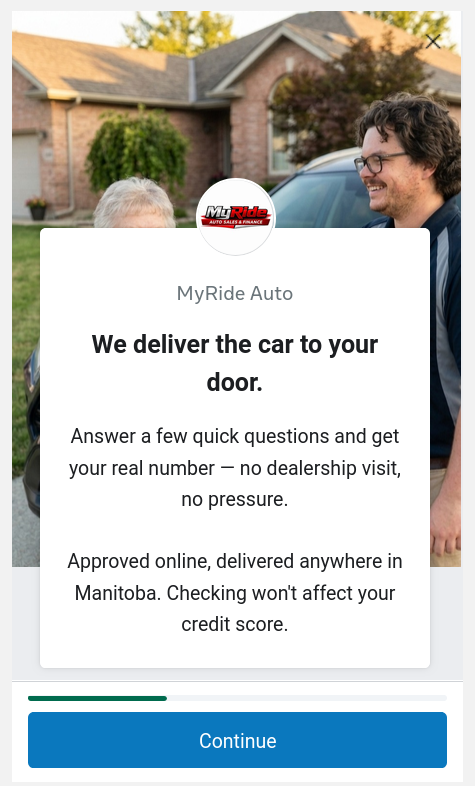
The form used to ask two things. It now asks eight — four times as many questions before anyone at MyRide spends a minute on the answer.
This is Meta's own higher-intent lead-form posture applied deliberately: more friction at the top, so that what gets through is a person who has already said how they will pay, when they are moving, what they are trading, and where the car has to arrive. Fogg's behaviour model holds that action needs ability as much as motivation. We ask for a little more ability at the form precisely because the platform behind it is built to remove every ounce of friction afterwards.
CPL +30%
The cost of a lead went up thirty percent after the form changed. For the same spend that is roughly twenty-three percent fewer leads than the old form would have produced.
We chose that. A lead that costs thirty percent more and answers eight questions is not thirty percent worse — it is a different product. The old lead was a name. The new lead is a name, a timeline, a payment path, a trade-in and a delivery address. Baymard's work puts checkout abandonment near seventy percent when friction is added carelessly; ours rose exactly where we wanted it to, among people who were never going to buy this quarter.
Qualified Demand
Eight answers is a routing record. Two answers was a hope.
Who they are and how to reach them, including the consent line, which is CASL and not a nicety. Cash, finance or unsure, which splits the workflow. When — and someday is a real answer that routes to a patient lane rather than a phone call. A trade-in, yes or no, which opens a seller file quietly behind the buyer. Where the car has to arrive. What they are looking at. A budget range. And the one thing that would stop them.
Retargeting
A vehicle is rarely a thoughtless purchase. Customers compare, disappear, come back, talk to family, think about financing, revisit and change their minds about what they want. Retargeting is not an afterthought bolted to the end of a campaign; it is the part of the architecture that respects that cycle.
The first impression is not the customer journey. Meta and Google retargeting both run, so the brand stays present between the first ad and the inquiry that eventually follows it.
Sales Handoff
The campaign does not stop when someone clicks. If the advertising promises a lower-pressure, more selective buying experience, the follow-up cannot arrive as an anonymous high-volume dealership BDC.
So the eight questions from the ad become the first paragraph of the briefing the salesperson reads before dialling. The service level is written into the platform rather than left as a habit: a system response inside sixty seconds, a named human within fifteen minutes during staffed hours, on the channel the person actually chose. This is the difference between calling faster and calling prepared.
Measurement
The playbook never measured clicks or reach. It listed five numbers: cost per lead by rep, vehicle and platform; cost per qualified lead; pre-approval completion rate; out-of-range deliveries, which is the proof of the niche; and lead to delivery to sold, which is the only one that pays the bills.
Cost per lead is first on that list because it is the easiest to read, not because it matters most. We let the first number get worse in order to make the second one better. From next month the headline is cost per qualified lead — reported per lane and never combined, because a person who is not buying yet is not a failed Express lead.
Nine questions we asked before a frame was shot.
- Why does this campaign exist? Manitoba does not know that online car delivery is an option. Demand has to be created before search intent can be captured.
- Who are we trying to move? Manitobans outside Winnipeg with a vehicle to trade and a reason to change it — people a Winnipeg lot structurally cannot serve.
- What should they believe? Approved online. Delivered to your door. Anywhere in Manitoba.
- What is the central creative concept? Ask more before the click, so the company can ask less after it. Qualification as a courtesy rather than an obstacle.
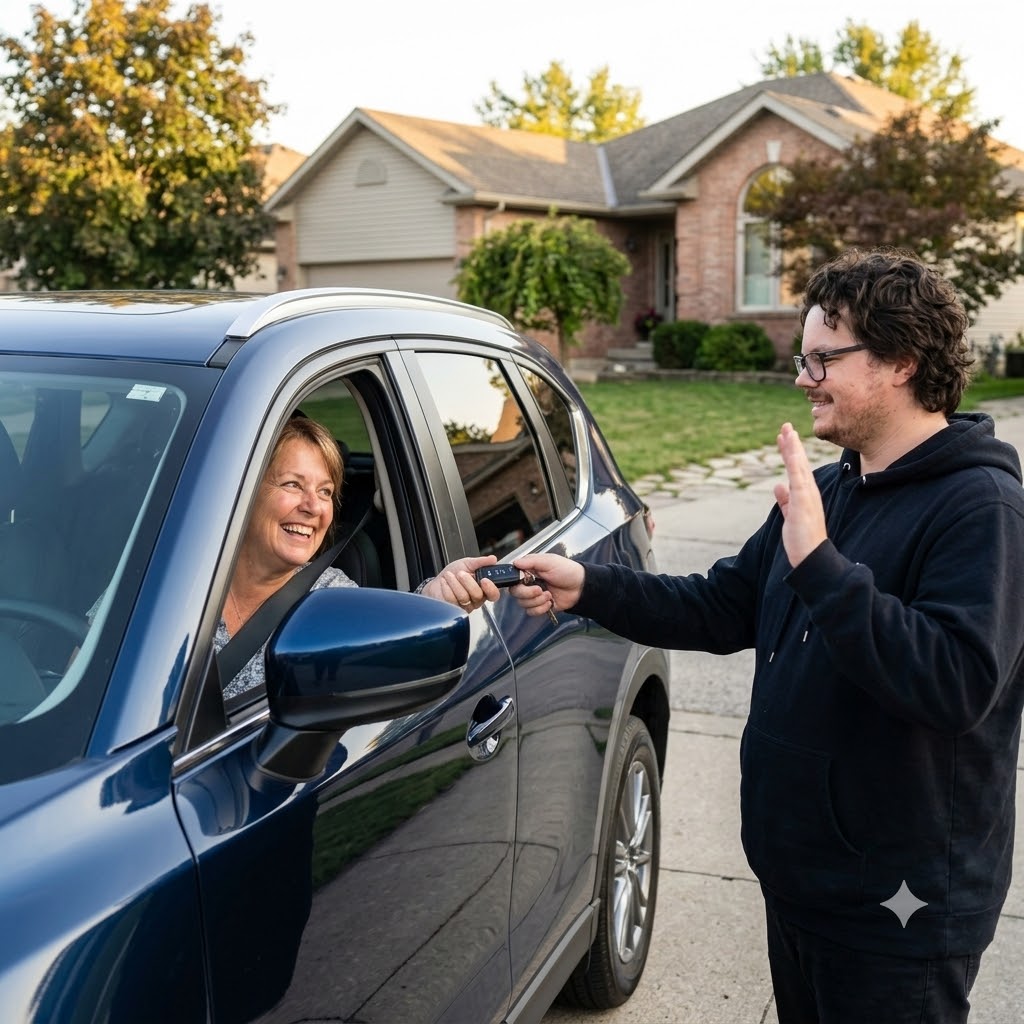
- What should it feel like? A named team, not a lot. Real people and selected vehicles, in placements built for how each is actually consumed.
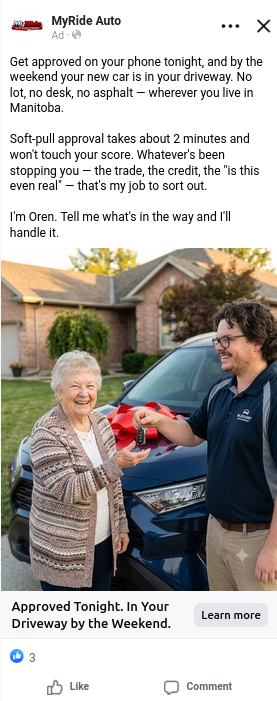
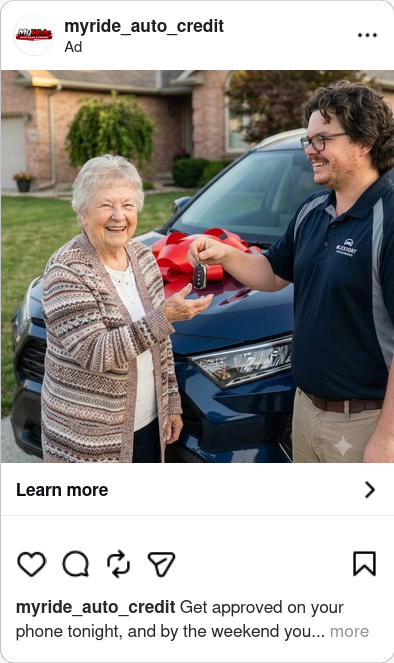
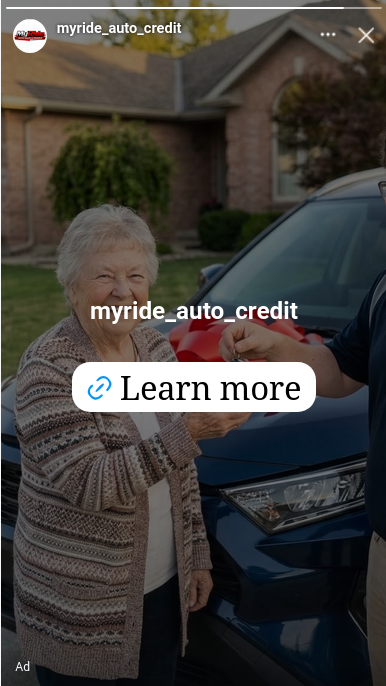
- How is it made? Three concepts, adapted per placement — Facebook Feed, Instagram Feed, Stories — never one asset resized nine times.
- Where does it run? Sixty-five percent Meta, thirty-five percent Google. Half the budget to prospecting, fifteen percent to retargeting once the pixel pool filled.
- What did the market do? Cost per lead rose thirty percent. Volume fell about twenty-three percent. What arrived carried eight answers instead of two.
- What changes next? Cost per qualified lead becomes the headline, by rep, by vehicle, by platform — with a recorded value rather than an estimate.
What worked, what did not, and what has not been measured.
Worked
- The eight-question form turned a lead into a routing record — payment path, timeline, trade and delivery area arrive before the first call.
- The delivery-area question surfaced out-of-range demand a Winnipeg lot cannot compete for.
- Retargeting was built into the architecture rather than added afterwards, which matched the length of a real vehicle purchase cycle.
- Channel roles stayed separate, so Meta was never judged on Google's job.
Did not
- Cost per lead rose thirty percent. That was chosen, but it is a real cost and it made the easiest-to-read number worse.
- Form abandonment rose. It rose among people who were not going to buy this quarter, but the campaign cannot yet prove that split with a recorded figure.
- Cost per lead was the headline for two months longer than it deserved to be.
- Cost per qualified lead — the six thousand dollars divided by the leads that answered all eight questions with a real budget and a real timeline. Not yet recorded.
- Qualified-lead count for the period.
- Pre-approval completion rate — the single best predictor of a sale in the playbook.
- Cost per funded deal. Ad spend is not yet a record in the platform, so this reads not measured rather than zero until the ad platforms are connected.
From the notebook.
Why we made MyRide's leads more expensive.
- IDEA
- A lead that costs thirty percent more and answers eight questions is not thirty percent worse. It is a different product.
- ARK
- We went from two qualifying questions to eight. Cost per lead rose thirty percent and volume fell about twenty-three percent, and both of those were the intended result. The old lead was a name. The new one is a name, a timeline, a payment path, a trade-in and a delivery address — a routing record instead of a hope. The cost per lead went up; the cost of a wasted afternoon went down.
Test the limit.
- SOURCE
- Seth Godin, This Is Strategy
- IDEA
- What is the ______est company in the category? Cheapest, fastest, most selective, most transparent? What are competitors structurally unwilling to do?
- ARK
- The useful version of this question is the last one. Not what could a competitor do, but what would their business model punish them for doing. A dealership cannot afford to tell you that none of its cars deserve recommending. That refusal is available to us precisely because we are not compensated for moving a specific unit.
The salesperson can be the brand.
- ARK
- Automotive marketing treats sales representatives as interchangeable endpoints — the ad belongs to the dealership, the lead belongs to the CRM, and a salesperson happens to receive it. Invert that and the acquisition asset becomes a person. The logo can be copied, the offer can be matched, the placement can be bought by every competitor in the market. Two named people cannot be duplicated.
- STRATEGY
- Bichar Hamid
- CREATIVE DIRECTION
- Tommy Pham
- PAID MEDIA
- ARK Marketing Ltd.
- CLIENT
- MyRide Auto
Not the deliverable — the problem. Tell us what the business needs to be true and we will tell you what should exist in the market for that to happen.
CLICK HERE ►